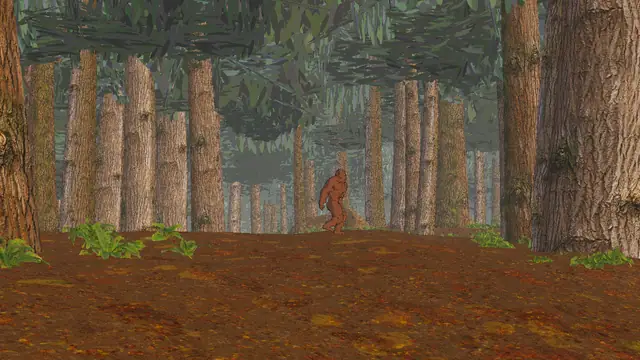
The river peoples' bunyip
The bunyip belongs to the traditions of the peoples of these rivers, with many names and forms. It is their story before it is anyone's mystery.
CRYPTIDS · Murray–Darling billabongs · 1847
The Bunyip · 1840s
Band VI · Down UnderLast light at a river-red-gum billabong.
Reading this case file is free. The 3D walk is in band VI, Down Under.
VR: open this page in the browser of a Meta Quest or another WebXR headset, start the walk, then choose View in VR. Android phones can use a Cardboard-style viewer.
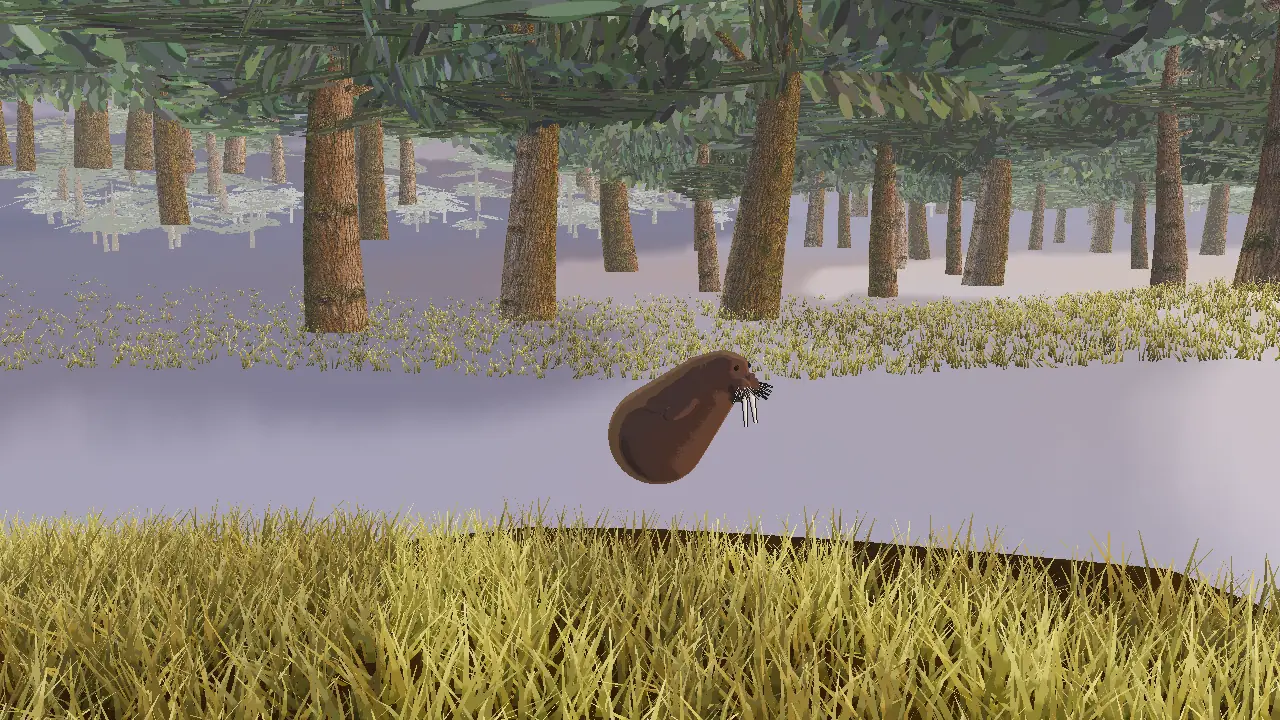
As the witnesses and believers tell it. A dramatization: nothing here is footage.
The billabongs of the Murray–Darling. The bunyip belongs to the traditions of the peoples of these rivers, with many names and forms; it is their story before it is anyone's mystery. Then, in the 1840s, the colonial survey camps.
Hear that?
There — by the reeds.
Settlers along these rivers wrote of something in the deep holes: dark, as big as a calf or bigger, with a cry that carried for miles at night.
In 1847 a strange skull from the Murrumbidgee was put on show in Sydney, and crowds came to see the bunyip's head. For a while, almost everyone had a sighting of their own.
Now switch on The Other Story and see it another way.
The moment the head above the water
A seal, hundreds of kilometres from the sea — as they are recorded here.
The same moment, replayed on the same ground under the leading conventional explanation.
Reported · Investigated · Explained · Folklore — every card says which.
The bunyip belongs to the traditions of the peoples of these rivers, with many names and forms. It is their story before it is anyone's mystery.
A strange skull found on the Murrumbidgee drew crowds in Sydney in 1847. Anatomists judged it a deformed foal or calf.
That deep booming is a bittern. And seals are recorded hundreds of kilometres up this river system.
Citations stay in their original language.
Murray–Darling billabongs, 1847. The Bunyip · 1840s.
A seal, far from the sea. A seal, hundreds of kilometres from the sea — as they are recorded here.
Yes. The Bunyip is in band VI, Down Under, a one-time licence; reading this case file is free.
No. Every scene is a 3D reconstruction on real terrain, and every photo you take carries a footer that says so.
Yes, in the browser of a Meta Quest or another WebXR headset: open this page, start the walk, then choose View in VR. The left stick walks, the right stick turns, the trigger opens the evidence and A or X switches The Other Story. In a Cardboard-style viewer on an Android phone, hold the screen to walk and tap a gold light.